Listed in: Technology
Should your business be accepting contactless payments?
If you’ve been thinking about going contactless, but haven’t quite got around to it, now’s the time. Here’s all the info you need to decide if it’s the right move for your business.
4 minute read
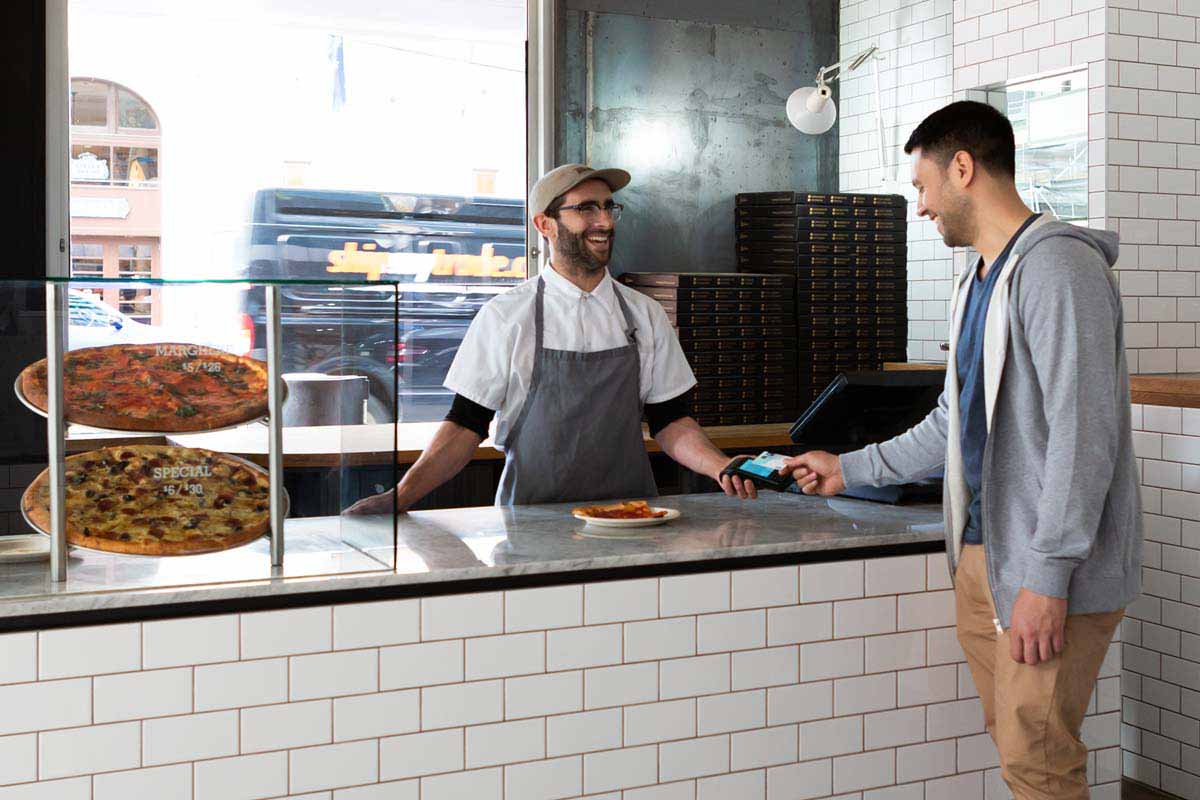
Over the past year, Visa payWave usage has grown by almost 50%, and it’s easy to understand why. Consumers want choices on ways to pay, and they like the convenience of contactless payments as they save them time.
According to a 2018 survey commissioned by Visa, merchants who provide contactless payment options can enjoy at least double the growth rates of non-contactless merchants – in terms of sales, transactions, new customers and loyalty. In particular, those in hospitality, general retail and grocery were some of the top major business sectors that benefitted greatly.
We expect these trends to continue, so if you’ve been thinking about going contactless, but haven’t quite got around to it, now is definitely the time. Here’s all the info you need to decide if it’s the right move for your business.
The business case for going contactless
- Speed – You could save time on every transaction, which reduces queuing times for your customers and means you’re able to accept more payments per hour – a win-win.
- Mobile payments – It’s not just cards that offer contactless technology – mobile phones do too.
- Minimise cash handling - This could greatly reduce the time in cashing up at the end of the day and reconciling the books.
- Security – The technology for contactless payments is highly secure. EFTPOS terminals in New Zealand have passed stringent global standards that protect the card information while processing the transaction, and the card or mobile device remains in the customer’s hands the entire time.
- No chargebacks – You won’t be charged back for an unauthorised contactless transaction under $200. As a retailer, even though the consumer has not signed or entered their PIN, you are guaranteed payment for contactless payments below the $200 threshold, providing you follow the programme rules.
How it works
Accepting contactless payments means your customers will simply hold their card or phone to a contactless-enabled terminal to complete their transaction, processing the payment in seconds.
Despite the common misconception, you can accept contactless payments over $200 – it will just require the customer to put in their PIN to authorise the payment. An easy way to remember this is: Under $200 is tap-and-go, over $200 is tap-and-PIN. And going forward, some mobile devices won’t require a PIN over $200 either - they will recognise the customer’s biometric ID, such as their finger print, making the transaction even simpler for you and your customer.
It’s easy to let your customers know you accept contactless payments: just display the universal symbol on your terminal. Some terminals will already display the symbol on the screen.
The cost of going contactless
There are costs associated with going contactless – this could be a percentage of the transaction, or a set fee per transaction. It’s worth noting that debit transactions, which are free via a standard chip and PIN system, will incur merchant service fees via contactless.
Many Kiwi business owners have concluded that the benefits of contactless payments for their customers and business outweigh the cost of investing in the service. You can serve more customers faster, which means you can increase your revenue, simply by updating your terminal.
But cash is still king, right?
Kiwi consumers don’t think so. New Zealand has world-topping card payment use. A recent report found a staggering 90% of Kiwi customers use cards as their main payment method. The costs associated with cash are often overlooked by businesses. Working mainly with cash may appear relatively inexpensive, but business owners should also take into account the time spent handling and counting cash, and transporting cash to the bank. You may be paying higher premiums for insurances, and there is the very real risk of theft or loss.
If you’re not sure which way to go, talk to your bank to fully understand the costs involved, and discuss, based on your current footfall, whether there could be savings to your business by switching to contactless payments.
Related articles
Payment solutions for small businesses
Businesses need to provide easy ways for their customers to pay them. Here, we look at the options, and pros and cons of cash and digital payment methods.
How tech can create business opportunities
Trying to expand your small business? Embracing technology is just one of the ways to make yourself more flexible and therefore more available to clients.
How the cloud can help your small business
Today’s business climate is constantly changing and, as a small business owner, keeping up is crucial to your success. Using cloud base computing solutions can help.
Contactless payment options
Find out how