Listed in: Technology International
Lauriston Solar Farm: Powered by collaboration, connection and capital
New Zealand’s energy demand is set to double by 2050. New renewable power projects, like Lauriston Solar Farm, will support this growth and the drive to net zero.
6 minute read
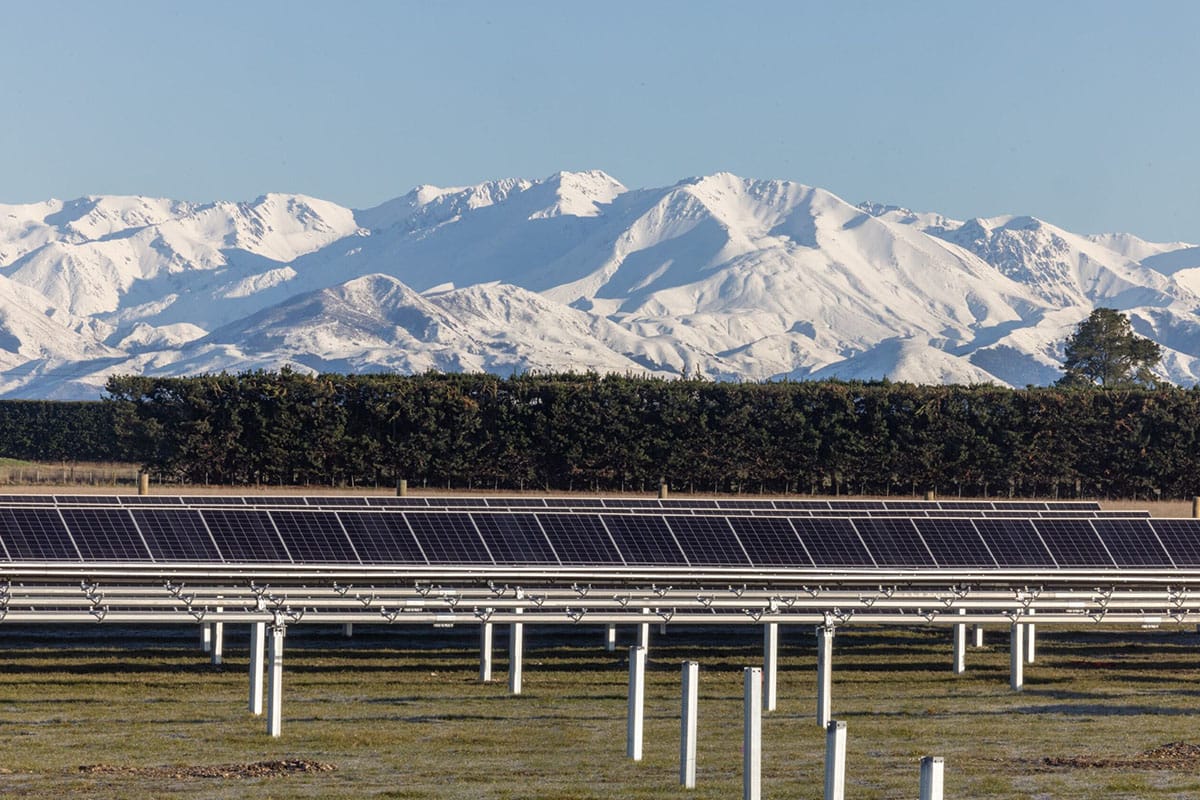
New Zealand has an opportunity to accelerate decarbonisation through electrification, powered by resilient renewable generation. This will require investment in projects and technologies that reduce carbon and help New Zealand meet its commitment to net zero greenhouse gas emissions by 2050.
The average home uses about 0.007 GWh of power a year, or about 7000 kWh1. In 2023, New Zealand homes and businesses used 39,130 Gigawatt hours (GWh) while generating 43,488 GWh2. Of the electricity generated, 37,640 GWh came from renewable sources (hydro, geothermal, wind, and solar).
While these numbers may look good now, demand by 2050 is expected to nearly double to around 70,000 GWh3.
Once completed, Lauriston solar farm will be New Zealand’s largest solar energy generation site to date. It will increase New Zealand’s ability to deliver new, renewable generation at pace, supporting our transition to a low emissions economy.
Collaboration for a better future
In 2021, Genesis – a BNZ customer and one of New Zealand’s largest electricity and natural gas retailers – joined forces with FRV Australia, a global renewable energy producer, in a joint venture. They committed to working together to develop 500MW of solar power generation.
Their first project is Lauriston, a 63MW solar farm, based near Ashburton. Once completed, this solar farm will generate around 100 GWh a year, enough electricity to power around 13,000 households4.
While Lauriston Solar Farm is a joint venture between FRV and Genesis, the project finance approach, taken by BNZ, sets a precedent for how capital can be efficiently used, making it possible to deliver more projects, like Lauriston, quickly.
Lauriston is one of the few project finance transactions in the New Zealand electricity sector to date. This is where a company is created to own and run a project. As the lending goes directly to the project, more of the money makes it into construction and production instead of being tied up in corporate structures.
The important step of funding
There have only been a few project finance operations in recent years. However, they will become more common as new, independent developers begin building sites to meet New Zealand’s future energy demands.
This means banks will play a key role in supporting the country’s transition to net zero, in line with the Zero Carbon Act, providing the capital for these project finance ventures to go ahead. As such, banks will require creative and agile approaches to project financing, as the nature and complexity of these projects requires flexibility and efficiency.
Beyond generation
Spark New Zealand, also a BNZ customer, has signed a 10-year Energy Supply Partnership which will see Genesis supply electricity to Spark purchased from the national grid, at volumes equivalent to the electricity generated by the Lauriston solar farm. The agreement will account for about 60% of Spark’s total yearly electricity requirements, heavily reducing its scope 1 and 2 emissions.
As well as these companies collaborating, the local Ashburton community is also heavily involved. Local suppliers and tradespeople are being contracted in the solar farm’s construction. The landowner of the solar farm site will continue to graze sheep underneath the shade of the panels. When the solar farm reaches the end of its life in about 35 years, the land will be returned to its original state.
Care has also been taken to ensure the solar farm fits into the aesthetics of the local area.
The creation of New Zealand’s largest solar farm as at 2024 was only possible through the collaboration of a large domestic energy supplier, a domestic bank, a global renewable energy construction company, and the local Ashburton community.
Together, we’re finding a way to net zero by 2050.
Sources:
1Average Power Bill in New Zealand 2024
2New Zealand Energy Quarterly | Ministry of Business, Innovation & Employment
3Electricity Demand and Generation Scenarios: Results summary July 2024 (PDF 1.9MB)
4Lauriston Solar Farm | Genesis NZ
Related articles
Taking the first steps to becoming a sustainably focused small business
Whether you’re a new or established small business, implementing sustainable practices can help reduce your business’s impact on people and planet, manage risk, and attract more customers.
ChargeNet: Powering Aotearoa’s EV future
CleanTech and sustainability are about providing what we need now, while ensuring future generations inherit a healthy local and global environment they can prosper in.
Sustainable foundations paying off for Otis Oat Milk
Driven by its vision for a thriving and vibrant plant-based industry in New Zealand, Otis Oat Milk aims to revolutionise consumer choices without sacrificing taste or tradition.
Finance options for business
Find out more
This article is solely for information purposes. It’s not financial or other professional advice. For help, please contact BNZ or your professional adviser.
No party, including BNZ, is liable for direct or indirect loss or damage resulting from the content of this article. Any opinions in this article are not necessarily shared by BNZ or anyone else.
References to third party websites are provided for your convenience only. BNZ accepts no responsibility for the availability or content of such websites.