Listed in: International
Sustainable foundations paying off for Otis Oat Milk
Driven by its vision for a thriving and vibrant plant-based industry in New Zealand, Otis Oat Milk aims to revolutionise consumer choices without sacrificing taste or tradition.
3 minute read
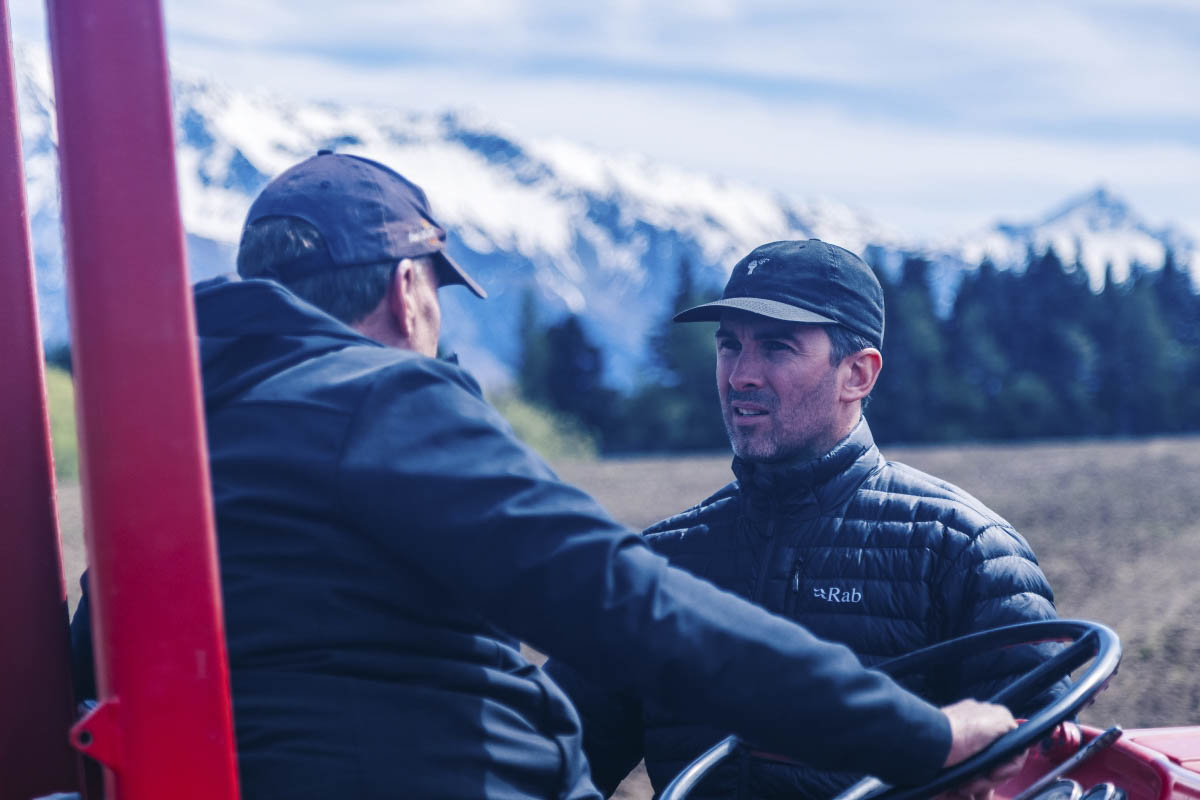
When it comes to product, the people behind Otis Oat Milk pride themselves on having a holistic view of business – one that encompasses being good for both people and planet.
“We have a long-term view in that if you build your business with credible sustainability certifications from the start, you will be rewarded in the long term,” says Otis co-founder Chris Wilkie.
But like all good things, it has taken time. Otis Oat Milk was founded in 2018 as New Zealand’s first oat milk, and while all the oats are grown and milled in New Zealand, they had to be shipped to Sweden to be turned into their award-winning product, due to the lack of premium manufacturing infrastructure at home.
“We simply couldn’t find a local partner who produced to the quality standards we wanted, nor matched that offshore technology.”
After an exhaustive four-year journey of searching for a manufacturing partner, stars aligned, and they brought all production onshore in 2024. Otis Oat Milk entered into partnership with Auckland-based beverage manufacturer, Free Flow Manufacturing, to design and build the first purpose-built plant in New Zealand.
Free Flow have added an additional 2,500 square metres to their existing production plant which would be able to annually produce 50 million litres of plant-based milks. It’s a rapidly expanding market, with demand for plant-based milk alternatives increasing from $61 million in 2019, to $88 million at the end of 2022.
Investment support opening doors of opportunity for Otis
To finally have production onshore is extremely exciting for the founders. “It was a huge challenge for us to find someone who would invest and partner with us to get the equipment we need to replicate our world-class oat milk,” says Chris.
“We wouldn’t have been able to do this without the support from BNZ and their belief in the long-term vision and sustainability of us as a business.”
A key part of having its oat milk produced in New Zealand was the company’s relationship with BNZ who provided additional working capital in the form of international trade finance, before inviting them to present at the Private Capital Forum where they secured a partner.
Making the connections into the investor base meant being able to add value beyond how a traditional bank would think.
Winidu Kannangara, BNZ Senior Partner, says the focus of BNZ in working with the individual needs of businesses helps them stand out as ‘the bank for business’.
“Trade finance was established to assist the business with a more structured working capital solution that aligned better with their cash flow cycle,” said Winidu. “It’s more scalable and can flex with future working capital needs and is there to assist with facilitating working capital demands as the group pivots and expands into export markets.”
Bringing benefits back home to Aotearoa New Zealand
Otis co-founder Tim Ryan says the new plant is a massive piece of infrastructure for New Zealand and farming, and one that brings an instant saving of 30% in freight and logistics to the company. It also opens the doors for development of more exciting plant-based products.
The quality of Otis Oat Milk has not been lost on offshore markets, a side of the business that continues to grow.
“We felt from the beginning that New Zealand had become too reliant on intensive dairy farming,” says Chris. “Something had to change – we couldn’t keep going down the same pathway of the past 20 years.”
He and Tim wanted to be part of the solution. “Just by switching from dairy to oat milk, people are able to impact and influence change in a positive way without sacrificing your flat white or bowl of cereal each morning.”
They both come from farming backgrounds and believe that a diversified farming model would support New Zealand’s net zero ambitions.
“Oats are a grain that have been grown here for centuries, that grow sustainably, and can be turned into a delicious dairy alternative. To our brand, it’s a no brainer to strongly support these farmers to tap into a rapidly expanding consumer group,” says Tim. “This is a positive offering for the world as a pro-farmer brand.”
Expecting explosion in demand offshore
It seems plenty agree with their “Hail Mary” effort. “There’s been massive uptake,” says Tim. From small beginnings, the alternate milk producer is now selling across the nation and into Asia and the Middle East.
“We’re expecting exponential growth into Asian markets,” says Chris. “They have a real appetite for New Zealand dairy but many are lactose intolerant, so our focus is to grow that market.”
Sustainability has always been foundational for the company. While processing in Sweden, Otis put its “best foot forward” to offset what they could – the production of the milk, packaging, and all the transportation involved. “We offset those emissions by 120% through purchasing verified carbon credits from Ekos’s carbon offset projects.”
“Processing in New Zealand means we will significantly reduce our carbon footprint. Our target is to go from 0.849 kgsCO2e / Litre to 0.425 kgsCO2e / Litre – a greater than 50% reduction,” says Tim.
“We are definitely a purpose-driven organisation and believe in placing people, planet, and profit evenly pegged – we look holistically at what is good and right.” That does mean extra work for a rather lean team and they are up against “ginormous global brands,” but it is something they believe fully in.
“It’s important to be motivated by more than just making money,” says Chris. “We truly believe that New Zealand should have a vibrant plant-based industry. That’s what gets us up in the morning.”
They are both confident there will be an explosion of homegrown brands to follow. Already there are more than ten oat-based brands on shelves, but Otis was the first plant milk of any sort to use solely New Zealand plants. Ironically, the nation’s oat industry is more than 100 years old and is one of the nation’s original farming crops.
Otis is already working on developing more products, including ice cream and yoghurt. “We want to be like a traditional dairy company and fill a suite of products so the consumer doesn’t have to give up things they enjoy and make lifestyle changes,” says Tim.
They both know change can be challenging, but it also drives innovation and they are happy to be providing new solutions.
Related articles
Taking the first steps to becoming a sustainably focused small business
Whether you’re a new or established small business, implementing sustainable practices can help reduce your business’s impact on people and planet, manage risk, and attract more customers.
Thriving Southland: Communities creating a healthy environment from mountains to sea
In Murihiku Southland, local farmers and communities are coming together to protect the land they love, supported by a community‐led organisation called Thriving Southland.
Cybersecurity essentials for small businesses
With the right preparation and education, protecting your small business from scams and cyber threats doesn’t have to be a scary prospect.
Finance options for business
Find out more
This article is solely for information purposes and is not intended to be advice with respect to any matter discussed in it. If you need help, please contact BNZ or your professional adviser. Neither BNZ nor any person involved in the material accepts any liability for any direct or indirect loss or damage arising out of the use of, or reliance on, all or any part of the content.